 Business License

Roll to Roll PECVD Technology for High-Barrier Films: Scalable Engineering Solutions for Industry
In modern advanced manufacturing, high-barrier films are rarely the most visible component of a product—but they are often the most decisive.
They do not define peak performance under ideal conditions; instead, they determine whether a system can operate safely, reliably, and consistently over many years in real environments.
From lithium-ion and solid-state batteries to flexible OLED displays, pharmaceutical packaging, and precision electronics, barrier failure typically leads to system-level degradation or catastrophic failure, not just cosmetic or marginal performance loss.
This is why high-barrier film development follows a distinctive industrial trajectory:
Slow progress, long validation cycles, and extremely long product lifetimes once mature.
1. What Is a High-Barrier Film—From an Engineering Perspective?
At a fundamental level, barrier performance is governed by the diffusion of small molecules—primarily water vapor and oxygen—through materials.
However, real-world performance is dominated by engineering realities rather than ideal material constants.
Key factors include:
Micropores, pinholes, and local defects
Microcracks induced by thermal cycling, bending, or mechanical stress
Continuous diffusion paths formed across multilayer structures
As a result, the true engineering goal of a high-barrier film is not zero permeation, which is practically unattainable, but to delay permeation long enough that it never becomes a dominant failure mechanism during the product’s service life.
This principle explains why single-layer or single-material solutions rarely succeed at industrial scale.
2. Three Barrier Strategies and Their Practical Limits
Metal Barrier Layers: High Reliability, Limited Flexibility
Aluminum foil and other metal barriers remain the backbone of applications such as battery aluminum–plastic films.
Advantages
Near-complete blockage of water vapor and oxygen
Stable, repeatable performance
Well-understood failure modes
Limitations
High weight
Poor flexibility
Strong dependence on edge sealing
Limited compatibility with ultra-thin and highly integrated designs
Metal barriers excel where safety margins must be conservative, but they restrict future trends toward lightweight, flexible, and highly integrated systems.
Inorganic Thin Films: Excellent Metrics, High Sensitivity
Inorganic coatings such as SiOx, SiNx, and AlOx can achieve extremely low WVTR and OTR values under laboratory conditions.
However, industrial challenges include:
Residual internal stress
Crack formation under bending or thermal cycling
Difficulty maintaining uniformity and yield over large areas
In practice, inorganic layers are rarely used alone. They function best as barrier layers within multilayer systems, where their weaknesses are mitigated by organic buffers.
Organic Layers: The Hidden Key to Reliability
Organic polymer layers typically exhibit modest intrinsic barrier performance.
Yet in real products, they are indispensable because they:
Absorb and redistribute stress
Block crack propagation
Stabilize interfaces between inorganic layers
From an engineering standpoint, organic layers often determine whether a high-barrier film survives real operating conditions.
Multilayer Architectures: The Only Scalable Engineering Path
By alternating inorganic and organic layers, diffusion paths become long, tortuous, and statistically improbable.
This redundancy-based approach transforms high-barrier films from laboratory materials into repeatable, scalable industrial products.
3. Industry Trends: Thinner, Stronger, and More Sustainable
Performance Requirements Continue to Rise
Power batteries and general high-barrier packaging
WVTR <0.01 g/m²·day
OTR <0.1 cm³/m²·day
Flexible OLED and advanced electronics
WVTR as low as 10⁻⁶–10⁻⁴ g/m²·day
OTR down to 10⁻³–10⁻⁵ cm³/m²·day
Solid-state batteries
Thermal compatibility above 150 °C
Long-term stability under aggressive environments
Sustainability and Regulation
Reduced reliance on aluminum foil
Development of all-polymer or recyclable barrier structures
Compliance with evolving regulations such as the EU Battery Regulation
Customization and Functional Integration
Tailored barrier designs for LFP, NCM, and solid-state batteries
Integration of smart features such as RFID or temperature indicators
Application-specific designs for displays, pharmaceuticals, and energy storage
4. Why PECVD Is a Core Technology for High-Barrier Films
PECVD Process Fundamentals
Plasma-Enhanced Chemical Vapor Deposition (PECVD) uses plasma energy to activate precursor gases, enabling dense film growth at relatively low temperatures—typically 80–150 °C.
This makes PECVD uniquely suitable for polymer substrates such as PET and PI, avoiding thermal deformation or degradation.
Engineering Control Enabled by PECVD
PECVD allows precise control over:
Film density and defect density
Chemical composition and stoichiometry
Internal stress balance
Interfacial adhesion between layers
These parameters are essential for building reliable multilayer barrier systems, not just achieving impressive test values.
Industrial Advantages of PECVD
Dense yet mechanically compliant films
Excellent compatibility with organic/inorganic multilayers
Low-temperature processing
Roll-to-roll production capability
Solvent-free, environmentally friendly manufacturing
PECVD does not chase extreme laboratory records. Instead, it delivers stability, repeatability, and scalability—the qualities that matter most in industrial production.
5. Application-Driven Market Growth
Power Batteries and Energy Storage
High-energy-density batteries are extremely sensitive to moisture and oxygen ingress.
Barrier films must provide:
Long-term stability over 10+ years
Ultra-low WVTR and OTR
High-temperature process compatibility
Lightweight and flexible construction
The global high-barrier film market for batteries is growing at an estimated 20–25% CAGR, making it one of the most important application segments.
Flexible Displays and Electronics
OLEDs, foldable displays, Micro-LEDs, and wearable electronics demand:
Ultra-thin structures
Long-term barrier reliability under repeated bending
PECVD-based multilayer barriers are currently the only proven industrial solution.
Pharmaceutical and Advanced Packaging
Long shelf-life requirements
Transparency combined with high barrier performance
Compliance with FDA and EU standards
Increasing emphasis on recyclability
6. SIMVACO’s Engineering Approach to High-Barrier Film Equipment
At SIMVACO, high-barrier film development is treated as an engineering system challenge, not a single-parameter optimization.Our approach follows a clear industrial pathway:
Pilot-scale systems to understand failure mechanisms and stress behavior
Scale-up platforms to validate process windows and reproducibility
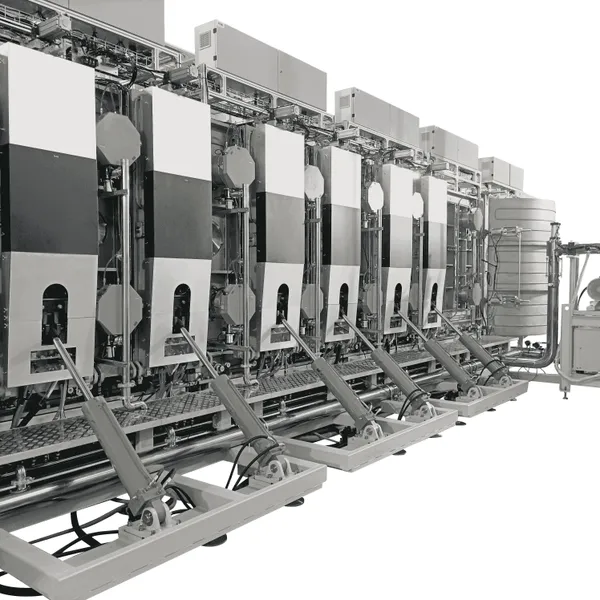
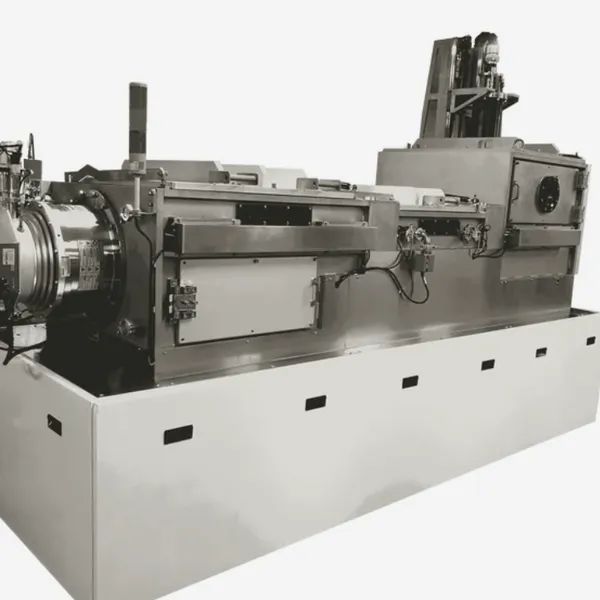
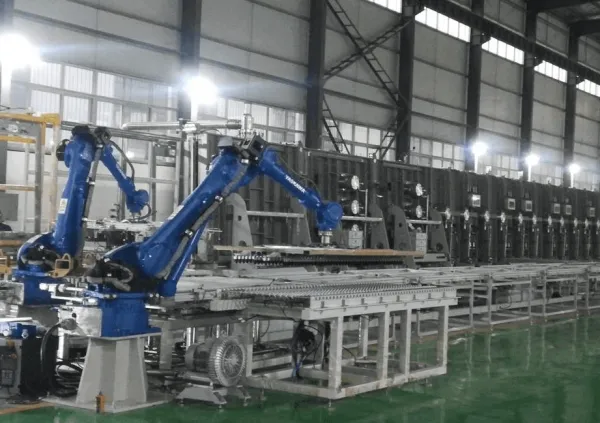
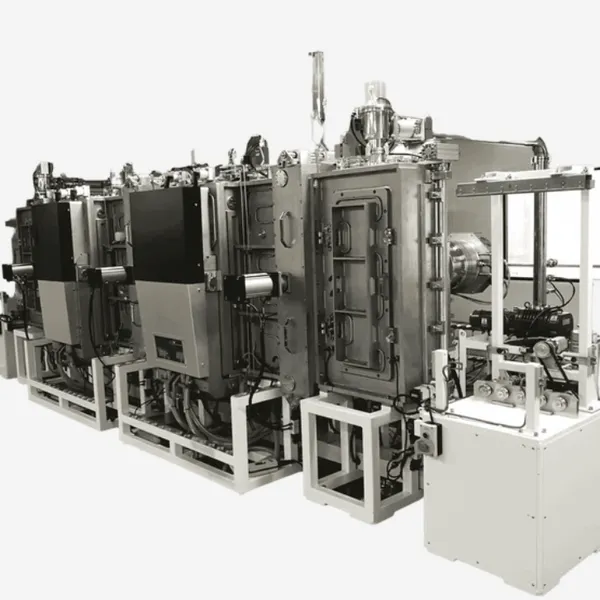
Production-ready PECVD equipment designed for long-term stability, uniformity, and customer integration
Rather than pursuing short-term performance claims, SIMVACO focuses on repeatable engineering solutions that can be transferred from laboratory trials to mass production.
7. Conclusion: High-Barrier Films Are a Long-Term Engineering Investment
High-barrier films may be thin, but they are foundational to modern technology.
They support battery safety, enable flexible electronics, protect pharmaceuticals, and extend product lifetimes across industries.
This field rewards patience, engineering discipline, and system-level thinking—not shortcuts.
Through continuous development of PECVD-based high-barrier film equipment, SIMVACO is building a solid engineering foundation for advanced functional films, supporting customers from pilot development to industrial production and contributing to more reliable, sustainable manufacturing worldwide.
About SIMVACO
SIMVACO is a professional manufacturer of vacuum coating and PECVD equipment, providing scalable solutions for high-barrier films, functional coatings, and advanced material applications.
Recently Posted
-
From Wafer to Panel: The Role of Large-Area PVD in Advanced Packaging
August 26, 2026From Wafer to Panel: The Role of Large-Area PVD in Advanced PackagingAs semiconductor devices continue to evolve for artificial in Read More
 -
10 Key Factors to Consider When Selecting a PVD Coating System
August 11, 2026Selecting the right industrial PVD coating system is an important investment decision for manufacturers. A properly designed PVD v Read More
 -
What is a Vacuum Metal Deposition?
April 17, 20261. Introduction to Vacuum Metal DepositionVacuum Metal Deposition (VMD), also known as vacuum metallization, is a high-precision t Read More
 -
Flexible Perovskite Solar Cells: Powering the Next-Generation Orbital Energy Systems
April 1, 2026As commercial space enters the era of mega-constellations and orbital infrastructure, energy systems are no longer just auxiliary Read More

Contact Us
Recommended Products
-
 Large Glass Anti-Reflection Vertical In-line Sputtering PVD Coating System SIMVACOUS$ 1000000 - 1100000MOQ: 1 Set
 -
Perovskite Solar Cell PVD Coating Machine Thermal Evaporation Vacuum Coating SIMVACOUS$ 200000 - 400000MOQ: 1 Set
-
High Quality PVD Coating Machine for AR AF Phone Cover Glass With ICP Plasma SIMVACOUS$ 799000 - 959800MOQ: 1 Set
-
High-Performance Vacuum Coating Machine for Mirror Manufacturing SIMVACOUS$ 500000MOQ: 1 Unit
-
SIMVACO Perovskite Solar Cell PVD Magnetron Sputtering Machine Thin Film Deposition SystemUS$ 650000 - 800000MOQ: 1 Set
-
SIMVACO High-Performance Metal Ceramic PVD Coating Machine Hard Vacuum CoatingUS$ 350000 - 500000MOQ: 1 Set
-
SIMVACO Advanced Vacuum Evaporation Coating Equipment for Automotive LightingUS$ 70000 - 1000000MOQ: 1 Set
-
SIMVACO Eco-Friendly Vacuum Evaporation Coating Machine for Plastic Christmas ProductsUS$ 50000 - 60000MOQ: 1 Set
-
SIMVACO Tool Superhard Coating Ion Plating Machine Enhanced Hard Film Deposition HardwareUS$ 50000 - 110000MOQ: 1 Set
-
SIMVACO Large-Area Multi-Arc Ion Decorative Coating Machine for Metal SurfacesUS$ 1000000 - 1100000MOQ: 1 Set