 Business License

10 Key Factors to Consider When Selecting a PVD Coating System
Selecting the right industrial PVD coating system is an important investment decision for manufacturers. A properly designed PVD vacuum coating system can improve coating quality, production efficiency, process stability, and long-term operating performance.
However, selecting a PVD coating machine is not simply a matter of comparing equipment prices or individual specifications. Different applications require different coating technologies, chamber designs, vacuum configurations, and process capabilities.
A system designed for decorative coatings may have completely different requirements from equipment used for optical glass, electronic components, automotive parts, or functional thin films.
Before investing in a PVD coating system, manufacturers should evaluate:
Coating application requirements
PVD technology selection
Product size and loading method
Vacuum system performance
Film uniformity and process control
Automation requirements
Production capacity
Long-term operating cost
Supplier engineering capability
Table of Contents
1. Define Your Coating Application Requirements
2. Select the Appropriate PVD Coating Technology
3. Evaluate Coating Performance Requirements
4. Consider Product Size and Vacuum Chamber Design
5. Evaluate Vacuum System Performance
6. Check Target Configuration and Material Compatibility
7. Evaluate Film Uniformity and Process Control Capability
8. Consider Automation and Production Integration
9. Analyze Production Efficiency and Total Cost of Ownership
10. Choose a PVD Equipment Supplier with Engineering Experience
Frequently Asked Questions
Conclusion
1. Define Your Coating Application Requirements
The first step in selecting a PVD coating system is clearly defining the purpose of the coating. The equipment should be selected based on required coating performance, substrate characteristics, and production goals.
Different industries require different thin film properties, including:
Decorative appearance
Wear resistance
Corrosion protection
Electrical conductivity
Optical performance
Barrier properties
Improved surface adhesion
Typical Application Examples
Automotive components often require excellent appearance, scratch resistance, environmental durability, and stable color performance.
Optical glass applications require precise film thickness control, high uniformity, and stable optical characteristics.
Electronic and semiconductor-related applications require high cleanliness, excellent repeatability, and consistent film properties.
Before selecting a PVD vacuum coating machine, manufacturers should define:
Substrate material
Product dimensions
Coating material
Required film thickness
Production volume
Quality requirements
2. Select the Appropriate PVD Coating Technology
PVD (Physical Vapor Deposition) includes several coating technologies. The correct technology depends on coating requirements, product characteristics, and production conditions.
Magnetron Sputtering System
Magnetron sputtering is widely used for industrial thin film applications, especially where good uniformity and stable process control are required.
Typical applications include:
Architectural glass coating
Automotive glass coating
Optical coatings
Display components
Conductive thin films
Functional coatings
Main advantages:
Good coating uniformity
Wide material compatibility
Stable deposition process
Suitable for large-area coating
Arc Ion Plating System
Arc ion plating is commonly used for applications requiring strong adhesion, dense coating structures, and high wear resistance.
Typical applications include:
Cutting tools
Wear-resistant coatings
Decorative coatings
Hard coatings
Key advantages:
High ionization rate
Strong coating adhesion
Dense film structure
Vacuum Evaporation Coating System
Vacuum evaporation is commonly used for:
Optical coatings
Reflective metal films
Special thin film applications
There is no universally best PVD technology. The correct solution depends on the required coating properties, substrate materials, and production objectives.
3. Evaluate Coating Performance Requirements
After selecting the coating technology, manufacturers should define the required film performance. Important parameters include thickness control, adhesion strength, uniformity, and functional properties.
Film Thickness Control
Precise thickness control is essential for optical coatings, electronic films, and other applications where small variations can affect product performance.
Adhesion Strength
Strong adhesion ensures long-term coating reliability, especially for protective and wear-resistant applications.
Film Uniformity
Uniform coating thickness directly affects product consistency, production yield, and final performance.
Functional Properties
Depending on the application, coatings may require:
High hardness
Low friction coefficient
Optical transparency
Electrical conductivity
Chemical resistance
4. Consider Product Size and Vacuum Chamber Design
The vacuum chamber is one of the most important parts of a PVD coating machine. Its design determines product compatibility, production capacity, and future expansion possibilities.
Key considerations include:
Maximum substrate size
Product loading method
Batch capacity
Chamber configuration
Future upgrade requirements
For large-area applications such as glass coating, equipment often requires optimized chamber structures, target arrangements, and substrate handling systems.
For precision components, compact chamber designs with accurate fixtures may provide better process control.
Before purchasing equipment, manufacturers should confirm:
Maximum product dimensions
Processing capacity per cycle
Loading and unloading requirements
Available installation space
5. Evaluate Vacuum System Performance
The vacuum system is the foundation of a stable PVD coating process. A reliable vacuum environment directly influences film quality, plasma stability, and production repeatability.
Ultimate Vacuum Level
A suitable vacuum level helps reduce contamination from residual gases and provides a stable environment for thin film deposition.
Pumping Capacity
The pumping system should be matched with:
Chamber volume
Process requirements
Production cycle time
Common vacuum components include:
Rotary vane pumps
Roots pumps
Turbomolecular pumps
Cryogenic pumps
The highest vacuum specification is not always the best solution. A properly configured vacuum system should match the actual coating process and production requirements.
6. Check Target Configuration and Material Compatibility
The target system directly affects coating material selection, production efficiency, and process flexibility. A properly designed target configuration helps achieve stable deposition performance and easier maintenance.
Important factors include:
Target quantity
Target size
Target utilization rate
Target replacement convenience
Material compatibility
Common PVD Coating Materials
For decorative applications, commonly used target materials include:
Titanium (Ti)
Chromium (Cr)
For functional and industrial coatings, manufacturers may use:
Oxide materials
Nitride materials
Alloy targets
Advanced functional materials
When selecting a PVD coating system, the target configuration should match both current production requirements and potential future applications.
7. Evaluate Film Uniformity and Process Control Capability
For industrial production, coating uniformity is one of the most important indicators of equipment performance.
Film uniformity is influenced by several factors:
Vacuum chamber design
Target arrangement
Substrate movement
Plasma distribution
Process parameter stability
A reliable industrial PVD coating system should provide accurate control of:
Vacuum pressure
Gas flow
Deposition power
Deposition time
Substrate movement speed
For high-value production applications, modern PVD equipment may also include:
Real-time process monitoring
Recipe management
Data recording
Production traceability
MES integration capability
These functions help manufacturers improve repeatability, reduce process variation, and maintain consistent product quality.
8. Consider Automation and Production Integration
Automation is becoming increasingly important in modern manufacturing. However, the appropriate automation level depends on actual production requirements.
Possible automation functions include:
Automatic loading and unloading
Recipe management
Process monitoring
Alarm management
Data collection
Factory system integration
Manufacturers should evaluate automation based on:
Production volume
Labor requirements
Product consistency requirements
Investment objectives
A highly automated system is not always the most suitable choice. The ideal solution is automation that improves efficiency, quality control, and production stability.
9. Analyze Production Efficiency and Total Cost of Ownership
The purchase price of a PVD coating machine is only one part of the total investment. A complete evaluation should include long-term operating costs.
Important factors include:
Production cycle time
Equipment utilization rate
Target consumption
Energy consumption
Maintenance requirements
Spare parts cost
Production downtime risk
The concept of Total Cost of Ownership (TCO) provides a more accurate way to evaluate equipment value.
A well-designed PVD vacuum coating system should provide:
Stable production performance
Reliable coating quality
Easy maintenance
Reduced downtime
Long service life
10. Choose a PVD Equipment Supplier with Engineering Experience
A PVD coating system is not simply a standard machine. It is an integrated engineering solution involving multiple technologies.
A complete PVD project requires expertise in:
Vacuum technology
Plasma technology
Thin film process development
Mechanical engineering
Automation integration
When selecting a PVD equipment supplier, manufacturers should evaluate:
Experience with similar coating applications
Engineering and customization capability
Installation and commissioning support
Technical service capability
Long-term cooperation capability
A successful coating project requires close communication between the equipment supplier and the customer's engineering team.
Frequently Asked Questions About PVD Coating Systems
What is the best PVD coating technology?
There is no single best PVD technology. Magnetron sputtering, arc ion plating, and vacuum evaporation each have different advantages. The right choice depends on substrate materials, coating requirements, production volume, and expected film performance.
How much does an industrial PVD coating machine cost?
The cost of an industrial PVD coating system depends on many factors, including:
Chamber size
Coating technology
Vacuum configuration
Automation level
Production capacity
Customization requirements
The total investment should consider both initial equipment cost and long-term operating performance.
How long does a PVD coating system typically last?
With proper operation and preventive maintenance, industrial PVD coating equipment can provide many years of reliable service.
Regular maintenance of vacuum pumps, power supplies, targets, and critical mechanical components helps extend equipment lifetime and maintain stable production performance.
Why is vacuum performance important in PVD coating?
A stable vacuum environment reduces contamination, improves plasma stability, and helps achieve consistent coating quality and repeatable production results.
Conclusion: Choosing the Right PVD Solution for Long-Term Success
Selecting the right industrial PVD coating system requires a comprehensive evaluation of coating requirements, technology selection, chamber design, vacuum performance, process control, automation, production efficiency, and long-term operating costs.
The best coating equipment is not necessarily the most expensive system or the one with the highest specifications. The ideal solution is a system that provides stable production, consistent coating performance, reasonable investment, and the flexibility to support future growth.
SIMVACO specializes in PVD vacuum coating equipment and customized thin film coating solutions, providing:
Magnetron sputtering systems
Arc ion plating systems
Customized industrial PVD coating machines
SIMVACO solutions are designed for various applications, including:
Automotive components
Optical products
Electronic materials
Functional thin films
Industrial surface coatings
For companies planning new coating production lines, early technical communication, process evaluation, and equipment planning are essential steps toward achieving long-term project success.
If you are planning a new PVD coating project or looking for a suitable industrial PVD coating machine, please contact SIMVACO for professional technical consultation.
Recently Posted
-
From Wafer to Panel: The Role of Large-Area PVD in Advanced Packaging
August 26, 2026From Wafer to Panel: The Role of Large-Area PVD in Advanced PackagingAs semiconductor devices continue to evolve for artificial in Read More
 -
Roll to Roll PECVD Technology for High-Barrier Films: Scalable Engineering Solutions for Industry
July 27, 2026In modern advanced manufacturing, high-barrier films are rarely the most visible component of a product—but they are often the mos Read More
 -
What is a Vacuum Metal Deposition?
April 17, 20261. Introduction to Vacuum Metal DepositionVacuum Metal Deposition (VMD), also known as vacuum metallization, is a high-precision t Read More
 -
Flexible Perovskite Solar Cells: Powering the Next-Generation Orbital Energy Systems
April 1, 2026As commercial space enters the era of mega-constellations and orbital infrastructure, energy systems are no longer just auxiliary Read More

Contact Us
Recommended Products
-
 Large Glass Anti-Reflection Vertical In-line Sputtering PVD Coating System SIMVACOUS$ 1000000 - 1100000MOQ: 1 Set
 -
Perovskite Solar Cell PVD Coating Machine Thermal Evaporation Vacuum Coating SIMVACOUS$ 200000 - 400000MOQ: 1 Set
-
High Quality PVD Coating Machine for AR AF Phone Cover Glass With ICP Plasma SIMVACOUS$ 799000 - 959800MOQ: 1 Set
-
High-Performance Vacuum Coating Machine for Mirror Manufacturing SIMVACOUS$ 500000MOQ: 1 Unit
-
SIMVACO Perovskite Solar Cell PVD Magnetron Sputtering Machine Thin Film Deposition SystemUS$ 650000 - 800000MOQ: 1 Set
-
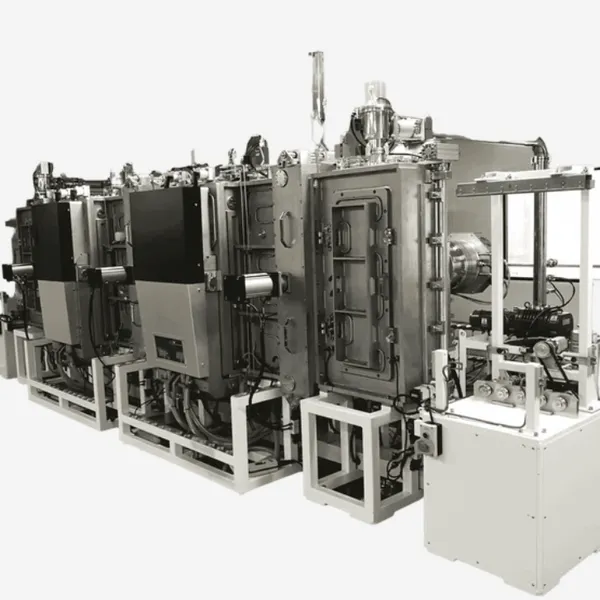
SIMVACO High-Performance Metal Ceramic PVD Coating Machine Hard Vacuum CoatingUS$ 350000 - 500000MOQ: 1 Set
-
SIMVACO Advanced Vacuum Evaporation Coating Equipment for Automotive LightingUS$ 70000 - 1000000MOQ: 1 Set
-
SIMVACO Eco-Friendly Vacuum Evaporation Coating Machine for Plastic Christmas ProductsUS$ 50000 - 60000MOQ: 1 Set
-
SIMVACO Tool Superhard Coating Ion Plating Machine Enhanced Hard Film Deposition HardwareUS$ 50000 - 110000MOQ: 1 Set
-
SIMVACO Large-Area Multi-Arc Ion Decorative Coating Machine for Metal SurfacesUS$ 1000000 - 1100000MOQ: 1 Set